
Home › Solutions › ESG & Circular Economy Research
⸺ ESG & CIRCULAR ECONOMY RESEARCH
Sustainability Is No Longer a
Choice. The Question Is Whether
You Can Prove It.
ESG & Circular Economy Research for Indian Manufacturers
Good intentions are no longer enough — stakeholders want evidence. Our ESG & Circular Economy Research uses field-validated circular economy surveys to assess your sustainability maturity and ESG readiness, giving you credible proof for BRSR obligations and stakeholder expectations.
18+
YEARS CONDUCTING CSS RESEARCH
35+
INDUSTRIES RESEARCHED
90+
CLIENTS RETURN FOR ANNUAL SURVEYS
Pan-India
MULTISITE RESEARCH CAPABILITY
⸺ THE CHALLENGE
Good Intentions Are Not
Enough. Stakeholders
Want Evidence.
The sustainability agenda has moved from voluntary to mandatory — driven by customer supply chain requirements, investor ESG frameworks, regulatory mandates, and employee expectations. Organisations that cannot substantiate their sustainability credentials with credible, independently gathered data face a growing commercial and reputational risk.
BPMBC's Circular Economy and Sustainability Surveys assess your ESG readiness, circular economy practices, and stakeholder perceptions — providing the field-validated evidence base your leadership team, customers, and investors are demanding.
⚠️ Are your customers requiring ESG scorecards as a condition of continued business?
⚠️ Do your investors or lenders require verified sustainability disclosures?
⚠️ Are you confident your circular economy practices can withstand independent scrutiny?
⚠️ Do your employees and communities see you as a genuinely responsible organisation?
✓ BPMBC provides the independent validation that turns claims into credible evidence.
⸺ THE CIRCULAR ECONOMY FRAMEWORK
Moving from Linear
to Circular — and
Measuring the Journey.
The circular economy replaces the traditional "take-make-waste" linear model with a regenerative system designed to eliminate waste, keep materials in use, and restore natural systems. For industrial organisations, the transition requires redesigning products, supply chains, and business models — a complex, multi-stakeholder transformation that demands rigorous measurement.
BPMBC's founder holds a doctorate specialising in circular economy and sustainability — giving our research team an unmatched depth of understanding in this domain. We assess where your organisation sits on the linear-to-circular spectrum, identify the highest-impact transition opportunities, and measure how your practices are perceived by customers, suppliers, and communities.
The result is a credible, externally validated circular economy roadmap — not a self-assessment exercise.

Structured assessment of your current sustainability practices — waste, energy, water, emissions, supply chain, and circular design.
Practice Assessment
01
05
04
03
02
Define ESG dimensions, circular economy maturity criteria, and stakeholder groups — aligned to relevant reporting frameworks (GRI, BRSR, etc.).
Scope and Frmework
Independent surveys with customers, suppliers, employees, and community representatives on your sustainability credentials and credibility.
Stakeholder Perception Survey
Comparison of current practices against circular economy principles, industry benchmarks, and stakeholder expectations — identifying highest-impact gaps.
Gap & Opportunity Analysis
Circular economy transition roadmap with prioritised interventions, ESG scorecard, and independently validated sustainability report.
Roadmap & Report
⸺ OUR APPROACH
Combining stakeholder perception research with circular economy practice assessment — independently validated and board-ready.
A Structured 5-Step Methodology
⸺ WHAT YOU RECEIVE
We Assess All Three ESG Dimensions
Environmental, Social, and Governance — the full spectrum of sustainability performance that investors, customers, and regulators are measuring.
𝐄
Environmental
-
Carbon footprint and emissions reduction practices
-
Waste generation, reduction, and circular recovery rates
-
Water consumption and wastewater management
-
Energy efficiency and renewable energy adoption
-
Raw material sourcing and supply chain sustainability
-
Product end-of-life design and take-back programmes
Resource, emissions & ecosystem impact
𝐒
Social
-
Employee health, safety, and wellbeing standards
-
Labour rights and fair employment practices
-
Community impact and local stakeholder relationships
-
Diversity, equity, and inclusion practices
-
Supply chain labour standards and ethical sourcing
-
Customer impact, product safety, and responsible marketing
People, community & supply chain impact
𝐆
Governance
Accountability, transparency & conduct
-
Board-level sustainability oversight and accountability
-
Sustainability target-setting and performance disclosure
-
Anti-corruption and business ethics standards
-
Regulatory compliance and risk management systems
-
Stakeholder engagement and transparency practices
-
ESG reporting framework alignment (GRI, BRSR, TCFD)
⸺ Assessment DIMENSIONS
What We Assess
Nine dimensions spanning your circular economy practices, stakeholder perceptions, and ESG readiness.
1
♻️
Circular Economy Maturity
An assessment of where your organisation sits on the linear-to-circular spectrum — across design, production, distribution, use, and recovery phases.
2
🌡️
Carbon & Emissions Performance
Stakeholder perception and practice assessment of your carbon reduction commitments, progress, and credibility — including Scope 1, 2, and 3 awareness.
3
💧
Resource Efficiency & Waste
Waste reduction practices, recycling and recovery rates, water efficiency, and material circularity — assessed against sector benchmarks.
4
🔗
Sustainable Supply Chain
How your customers and suppliers perceive your supply chain sustainability commitments — and where gaps in practice vs. claim exist.
5
🏘️
Community & Social Impact
How local communities and employees experience your social responsibility — CSR credibility, employment practices, and community investment.
6
📊
Assessment of your readiness to meet BRSR, GRI, and investor-grade ESG disclosure requirements — identifying data gaps before they become compliance risks.
ESG Disclosure Readiness
7
👥
Stakeholder Sustainability Perception
Independent assessment of how customers, suppliers, investors, and employees actually perceive your sustainability credentials — versus how you present them.
8
🏆
Sustainability Benchmarking
How your ESG performance and circular economy maturity compares to industry peers — identifying where you lead, lag, or match sector norms.
9
🗺️
Transition Opportunity Mapping
Identification of the highest-value circular economy transition opportunities — ranked by environmental impact, commercial benefit, and implementation feasibility.
⸺ WHAT YOU RECEIVE
Research Deliverables
A comprehensive sustainability intelligence pack — independently validated and ready for customers, investors, and regulators.
📋
Executive ESG Summary
Board and investor-ready summary of your ESG performance — overall maturity score, dimension ratings, and top-priority gaps.
♻️
Circular Economy Maturity Report
Assessment of your position on the circular economy maturity scale — with phase-by-phase gap analysis and priority transition opportunities.
👥
Stakeholder Perception Report
What your customers, suppliers, and employees actually think about your sustainability practices — the external perception versus your internal narrative.
📊
ESG Scorecard
A structured E, S, and G scorecard — providing a single-page performance summary aligned to common reporting frameworks including BRSR and GRI.
🏆
Industry Benchmark Comparison
How your sustainability performance compares to sector peers — providing the competitive context your strategy and investor teams need.
🗺️
Circular Economy Roadmap
A prioritised, phased transition roadmap — identifying the interventions with the highest combined environmental and commercial value for your organisation.
⸺ WHY CHOOSE BPMBC
Expertise. Field Research.
Independent Validation.
Combining academic depth in circular economy with 17 years of primary research capability — BPMBC is uniquely positioned to deliver credible sustainability assessments.
🔒
Specialisation in Circular Economy
BPMBC's founder holds a doctorate specialising in circular economy — bringing genuine academic rigour to an area where many consultants operate on surface-level knowledge.
🏭
Independent Third-Party Validation
Sustainability claims carry far more weight with customers and investors when independently validated. BPMBC's neutrality is the foundation of the credibility we deliver.
👥
Industrial Sector Grounding
18+ years in manufacturing, chemicals, and industrial B2B — we understand the practical realities of sustainability transitions in capital-intensive sectors.
📐
Framework-Aligned Assessment
Our assessment methodology is aligned to BRSR, GRI, and TCFD — ensuring findings translate directly into your regulatory and investor reporting requirements.

Automotive & Auto Components
Industrial Manufacturing
Chemicals & Specialty Materials
Engineering & Capital Goods
FMCG & Consumer Goods
Industries We Serve
Defence & Aerospace
Financial Services (B2B)
⸺ SECTOR EXPERIENCE
Logistics & Supply Chain
IT & Technology Services
Retail & Distribution
Energy & Utilities
Pharmaceutical & Healthcare
Government & Public Sector
Infrastructure & Construction
⸺ ENGAGEMENT PROCESS
Frequently Asked
Questions
Everything you need to know about commissioning a Circular Economy and Sustainability Survey.
A self-assessment documents what you believe you are doing. An independently conducted BPMBC survey validates what you are actually doing — and how key stakeholders perceive your sustainability performance. Independent validation carries significantly more credibility with customers, investors, and regulators than self-reported data.
Our methodology is designed to align with BRSR (Business Responsibility and Sustainability Reporting — mandatory for listed Indian companies), GRI (Global Reporting Initiative), and TCFD (Task Force on Climate-related Financial Disclosures). We can tailor the assessment dimensions to your specific reporting obligations.
Yes. Many organisations commission this study specifically to respond to sustainability questionnaires from large customers — particularly multinationals with Scope 3 emissions reporting requirements. BPMBC's independently validated ESG scorecard provides far stronger evidence than self-completed supplier sustainability forms.
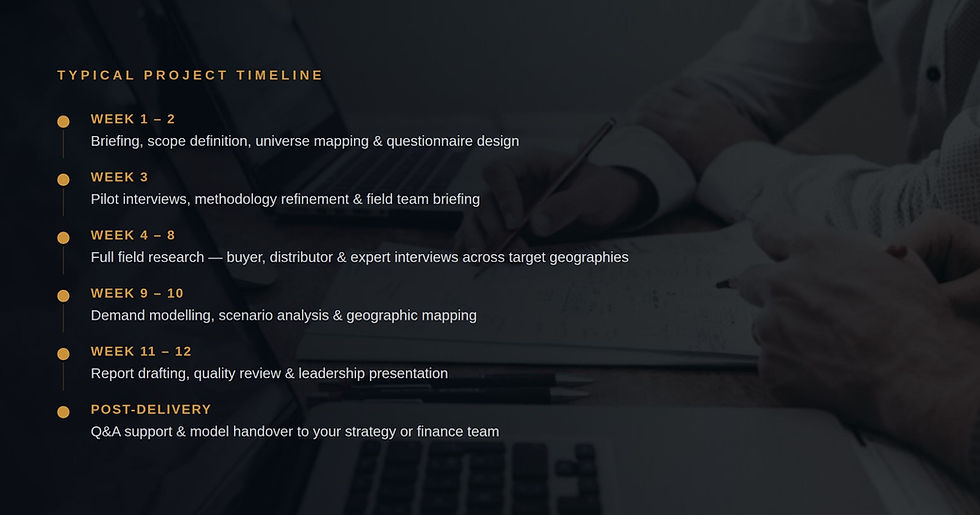
A standard Circular Economy and Sustainability Survey takes 8–10 weeks from briefing to final report — covering practice assessment, stakeholder perception surveys, gap analysis, and roadmap development. More comprehensive multi-stakeholder studies may take 12 weeks.
Yes. Many clients commission an integrated study assessing both their own sustainability practices and their supply chain's ESG performance — providing a complete picture of Scope 3 exposure and supply chain ESG risk. This is increasingly required by large customers and investors.
Yes. BPMBC's independently validated ESG reports are specifically designed to support investor-grade sustainability disclosures. Several clients have used our assessments as the evidence base for annual sustainability reports, investor ESG presentations, and BRSR filings.
"
BPMBC's circular economy assessment gave us something no internal audit could — an honest picture of where our practices fell short of our claims, and a credible, prioritised roadmap to close the gap. It became the foundation of our sustainability strategy for the next three years.
CHIEF SUSTAINABILITY OFFICER — SPECIALTY CHEMICALS GROUP, MAHARASHTRA