
Home › Solutions › operational diagnostics & process research
⸺ OPERATIONAL DIAGNOSTICS & PROCESS RESEARCH
Your Biggest Efficiency Gains
Are Hidden in Plain Sight.
We Find Them.
Operational Diagnostics & Process Research for Indian Manufacturers
The people closest to your processes already know what is broken. Our Operational Diagnostics & Process Research uses structured process improvement surveys to find the bottlenecks, inefficiencies, and root causes hiding in plain sight — delivering a prioritised improvement roadmap backed by field evidence.
18+
YEARS CONDUCTING CSS RESEARCH
35+
INDUSTRIES RESEARCHED
90+
CLIENTS RETURN FOR ANNUAL SURVEYS
Pan-India
MULTISITE RESEARCH CAPABILITY
⚠️ Do your teams spend significant time on rework, exception-handling, or workarounds?
⸺ THE CHALLENGE
The People Closest to
Your Processes Know
Exactly What's Wrong.
In most organisations, the root causes of operational inefficiency are well-known to the people working within the process — and largely invisible to those managing from above. Workarounds become embedded. Rework gets absorbed as normal. Bottlenecks are accepted as unavoidable. The cumulative cost is enormous, and it grows silently every quarter.
BPMBC's Operational Diagnostics & Process Research create a structured, independent channel to surface that embedded knowledge — collecting systematic evidence from the people who live within your processes daily. The result is a clear, prioritised map of where efficiency is being lost, why it is happening, and what interventions will deliver the highest return.
⚠️ Are the same operational problems recurring despite repeated improvement initiatives?
⚠️ Are process improvement decisions based on data — or on the opinions of the loudest voices?
⚠️ Do frontline workers have improvement ideas that never reach decision-makers?
✓ BPMBPMBC turns embedded operational knowledge into evidence-backed improvement priorities.

⸺ THE RESEARCH APPROACH
We Map the Process as
It Actually Runs — Not
as the Manual Says.
Most process improvement projects begin with the documented process — the flowchart in the quality manual. BPMBC begins with the lived process — the actual sequence of steps, decisions, exceptions, and workarounds that operators and support teams perform every day.
The gap between the documented process and the lived process is almost always where the inefficiency lives. Our surveys systematically capture that gap — across all relevant stakeholder groups — and translate it into structured, prioritised evidence for your improvement programme.
We assess process performance from three angles simultaneously: the structural design of the process, the capability of the people operating it, and the systems and tools supporting it. Improvement programmes that address all three consistently outperform those that address only one.

Design role-specific questionnaires for operators, supervisors, support functions, and internal customers — capturing all perspectives on process performance.
Stakeholder Survey Design
01
05
04
03
02
Define the process scope, identify all stakeholder groups, and map the documented process as the baseline for gap identification.
Process Scoping
Anonymous surveys and structured interviews with all stakeholder groups — capturing the lived process, pain points, and improvement ideas at each stage.
Field Research
Systematic analysis of bottlenecks, rework loops, handover failures, and system gaps — categorised by root cause type and frequency of impact.
Root Cause Analysis
Prioritised improvement recommendations mapped to effort vs. impact — with quick wins, medium-term projects, and strategic redesign opportunities.
Improvement Roadmap
⸺ OUR APPROACH
Multi-stakeholder, field-first research — designed to surface what management systems cannot measure.
A Structured 5-Step Methodology
⸺ WHAT YOU RECEIVE
Eight Process Domains We Assess
We cover the full range of operational and support processes — wherever efficiency is being lost in your organisation.
🏭
Production & Manufacturing
Workflow efficiency, machine utilisation, changeover times, defect rates, and production planning effectiveness.
🚚
Supply Chain & Logistics
Order processing, inventory management, inbound logistics, warehouse operations, and on-time delivery performance.
😊
Customer Service & Order Management
Order-to-cash cycle, complaint handling, escalation processes, and customer-facing response times.
🔗
Procurement & Vendor Management
Sourcing processes, purchase order cycle times, supplier onboarding, and contract management efficiency.
🎓
HR & People Processes
Recruitment, onboarding, performance management, training delivery, and employee lifecycle process efficiency.
💰
Finance & Accounts
Invoice processing, accounts payable/receivable, month-end close, and financial reporting cycle efficiency.
🔧
Maintenance & Asset Management
Preventive maintenance compliance, breakdown response, work order management, and asset lifecycle processes.
📋
Quality Management
Inspection processes, non-conformance handling, corrective action effectiveness, and quality system compliance.
⸺ Assessment DIMENSIONS
What We Assess
📏
📏
📏
📏
📏
1
Nine dimensions spanning process design, people capability, systems, and cross-functional collaboration.
1
🗺️
Process Design & Documentation
Are processes clearly designed, documented, and understood — or are critical steps left to individual interpretation and tribal knowledge?
2
🔄
Bottlenecks & Cycle Time
Where are the delays, queues, and approval backlogs that are stretching cycle times and frustrating both operators and customers?
3
🔁
Rework & Error Rates
What proportion of output requires rework, correction, or exception-handling — and at which process steps does this most frequently occur?
4
🤝
Handover & Interface Quality
How effectively do process handovers between teams, functions, or systems work — and where do information losses or delays occur at interfaces?
5
💻
Systems & Tools Adequacy
Do the systems and tools available to process operators support efficient work — or do they create workarounds, duplication, and manual re-entry?
6
🎓
Skills & Capability Gaps
Are the people operating the process adequately skilled and trained — and do capability gaps contribute to process errors or slowdowns?
7
📏
Stakeholder-Validated KPI Research
Are the right metrics in place to manage and improve the process — or are key efficiency and quality dimensions invisible to management?
🗣️
8
Improvement Culture & Voice
Do operators feel empowered to surface process problems and improvement ideas — or has a culture of acceptance and silence taken hold?
9
⚖️
Compliance & Risk in Process
Where do current process practices create compliance risk, regulatory exposure, or audit vulnerability — often an unintended consequence of workarounds.
Research Deliverables
⸺ WHAT YOU RECEIVE
A comprehensive evidence pack — board-ready and investment-grade.
📋
Executive Summary Report
Leadership-ready summary of the top process inefficiencies — ranked by impact — with the three most critical improvement priorities clearly identified.
🗺️
As-Is Process Gap Map
A structured mapping of the lived process versus the documented process — identifying every gap, bottleneck, and deviation with supporting evidence.
🔍
Root Cause Analysis Report
Systematic analysis of why inefficiencies exist — categorised by root cause type (process design, people, systems, management) for targeted intervention.
🎯
Improvement Opportunity Register
A ranked register of every improvement opportunity identified — scored by ease of implementation, cost impact, and time-to-benefit.
📈
Prioritised Improvement Roadmap
A phased 90-day / 6-month / 12-month improvement roadmap — with quick wins, medium-term projects, and longer-term redesign recommendations.
🔁
Leadership Presentation
Optional debrief session with your operations, process, and leadership team — walking through findings, root causes, and the improvement roadmap.
⸺ WHY CHOOSE BPMBC
People Tell the Truth
to an Independent
Researcher.
The most valuable process intelligence lives in the people operating the process — and it only surfaces when they feel genuinely safe to share it.
🔒
Anonymous, Independent Research
Frontline operators and supervisors are far more candid about process failures with an independent researcher than with their management team. BPMBC's neutrality and anonymity guarantee unlocks the honest operational intelligence that internal reviews miss.
🏭
Industrial Operations Expertise
18+ years working in manufacturing, engineering, and industrial organisations — our researchers understand shopfloor and operational realities, not just office processes.
👥
Multi-Stakeholder Research Design
We survey all stakeholder groups simultaneously — operators, supervisors, support functions, and internal customers — providing a 360° view of process performance that single-function reviews cannot deliver.
📐
Evidence-Based, Not Opinion-Based
Our improvement recommendations are grounded in systematically gathered, statistically analysed field data — not the opinions of the most senior person in the room.

Automotive & Auto Components
Industrial Manufacturing
Chemicals & Specialty Materials
Engineering & Capital Goods
FMCG & Consumer Goods
Industries We Serve
Defence & Aerospace
Financial Services (B2B)
⸺ SECTOR EXPERIENCE
Logistics & Supply Chain
IT & Technology Services
Retail & Distribution
Energy & Utilities
Pharmaceutical & Healthcare
Government & Public Sector
Infrastructure & Construction
⸺ ENGAGEMENT PROCESS
Frequently Asked
Questions
Everything you need to know about commissioning a Operational Diagnostics & Process Research.
Internal process reviews are typically led by management or improvement teams — which means frontline operators tend to present a sanitised picture of day-to-day performance. BPMBC's independent, anonymous surveys unlock the honest operational intelligence that internal reviews systematically miss: the workarounds that have become routine, the rework that goes unreported, and the improvements employees stopped suggesting long ago because nothing ever changed. Independence is the critical variable — people tell the truth to an external researcher in ways they will not to their own management chain.
We can assess any process with identifiable stakeholders — from production, supply chain, and quality management to customer service, procurement, finance, HR, and maintenance. There is no standard template. Every study is purpose-built around the specific process scope, the stakeholder groups involved, and the improvement objectives the client wants to address. If your organisation has a process and people operating it, we can design a study around it.
Yes. Multi-site process improvement studies are one of our most frequently commissioned engagement types. They enable organisations to identify which sites execute a shared process most effectively, and to transfer proven practices across the network. We design sampling to ensure each site is adequately represented so that valid cross-site comparisons can be drawn — not just aggregate findings that obscure site-level differences.
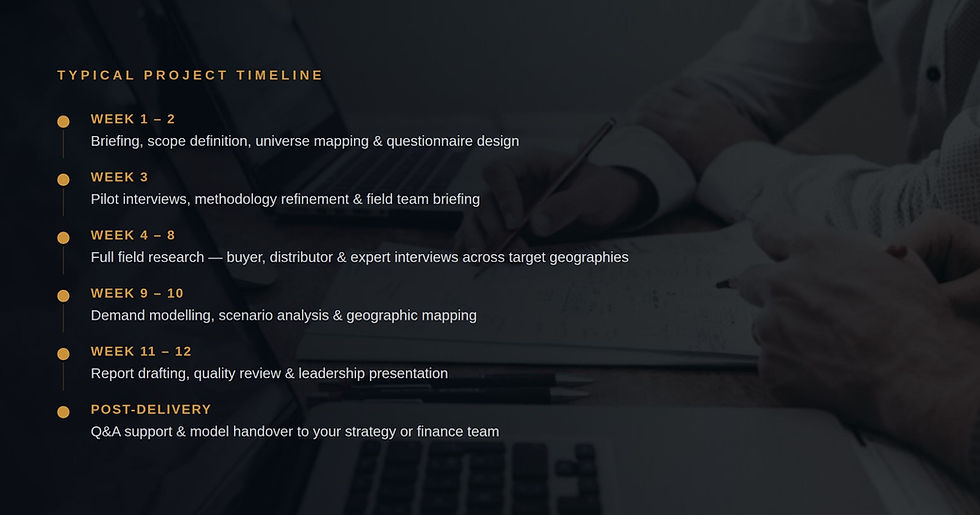
YA standard single-process study runs six to eight weeks from briefing to final report, covering process scoping, stakeholder survey design, field research, root cause analysis, and improvement roadmap development. Multi-process or multi-site studies typically require ten to twelve weeks. Timelines are agreed at project kick-off and built around your organisation's operational calendar.
Yes — and it is well-suited to this role. BPMBC's process improvement surveys are frequently commissioned as the voice-of-process data foundation for Lean, Six Sigma, or broader operational excellence programmes. They provide the structured, statistically valid stakeholder evidence that supplements quantitative performance data, ensuring improvement priorities are grounded in operational reality rather than assumption. The root cause analysis and improvement roadmap deliverables integrate directly into programme planning.
Yes. Annual or bi-annual follow-up surveys are an effective way to measure whether improvement initiatives have resolved the root causes identified, whether new problems have surfaced, and whether the improvement culture within the organisation is strengthening over time. Several BPMBC clients use this as a regular operational health check — tracking process performance trends across survey cycles and using the data to hold improvement programmes accountable to measurable outcomes.
"
We had been running Lean workshops for eighteen months with limited results. BPMBC's process survey told us why — the root cause wasn't our improvement methodology, it was that our frontline teams had stopped believing management would act on what they raised. That insight changed everything about how we ran the programme.
VP MANUFACTURING EXCELLENCE — DIVERSIFIED ENGINEERING GROUP, PUNE